
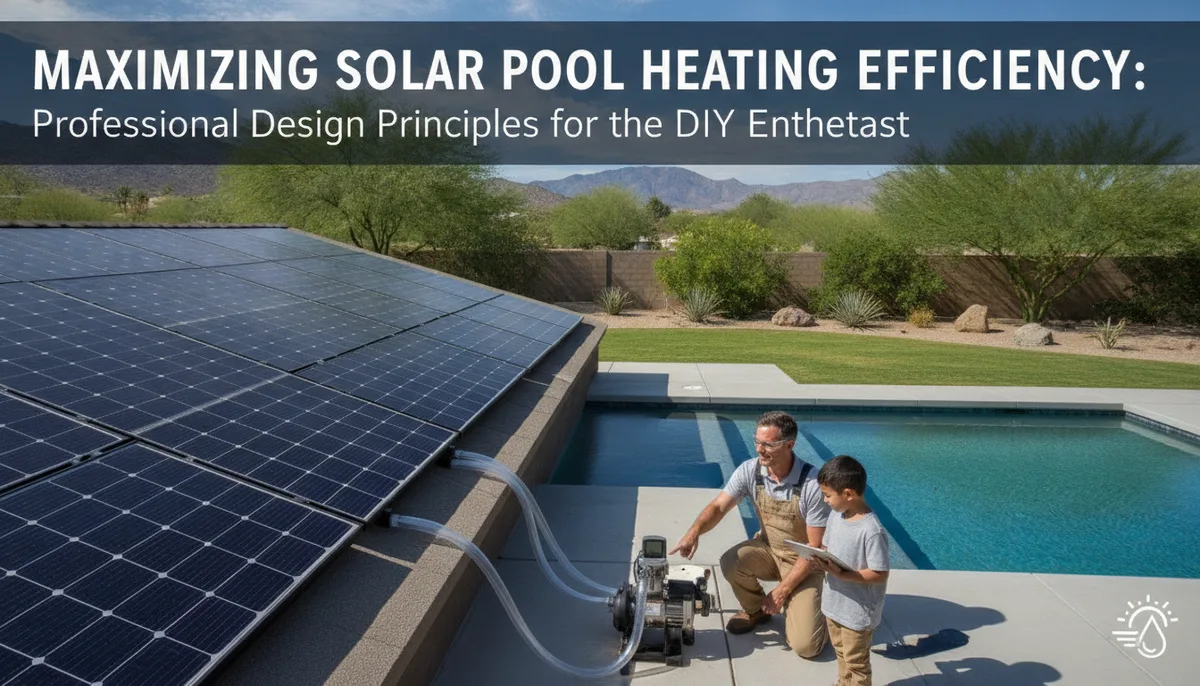
Maximizing Solar Pool Heating Efficiency: Professional Design Principles for the DIY Enthusiast
The Engineering Behind Effective Solar Pool Heating
For many pool owners, the dream of a "free" heated pool often ends in frustration when a DIY project fails to deliver consistent warmth. The difference between a system that marginally takes the chill off and one that extends your swimming season by four months lies in the application of professional engineering principles.
Solar pool heating is not merely about running water through black pipes; it is a game of thermal dynamics, surface area optimization, and hydraulic balance. To achieve professional-grade results, we must look at how industry leaders like Suntrek Solar design their systems—focusing on longevity, material integrity, and maximum heat absorption.
In this guide, we will break down the core components of high-efficiency solar thermal systems and how you can apply these "hacker" secrets to your own backyard setup.
Material Science: Why EPDM Trumps Rigid Plastic
The heart of any solar heater is the collector. While many entry-level DIY kits use rigid polypropylene (plastic) panels, professional installations almost exclusively utilize EPDM (Ethylene Propylene Diene Monomer).
The EPDM Advantage
EPDM is a high-performance synthetic rubber that offers several critical advantages:
- UV Resistance: Unlike standard plastics that become brittle and crack after a few years in the sun, EPDM remains flexible and resilient for decades.
- Thermal Conductivity: EPDM has excellent heat transfer properties, allowing it to soak up solar radiation and transfer it to the water inside the tubes with minimal loss.
- Chemical Tolerance: Pool water is a harsh environment filled with chlorine or salt. EPDM is chemically inert to these sanitizers, preventing internal degradation.
- Freeze Tolerance: Because the material is flexible, it can expand and contract. This makes it far more "forgiving" in climates where an unexpected overnight frost might occur, though systems should still be drained for winter.
When sourcing components, look for high-quality EPDM collectors that utilize a "webbed" design, which maximizes the surface area exposed to the sun.
High-quality EPDM solar pool heating panels
The Efficiency Paradox: Understanding Delta-T
A common mistake among DIYers is the belief that water coming out of the solar return should feel "hot" to the touch. If the water is scalding, your system is actually losing efficiency.
High Flow vs. High Temperature
In the world of solar thermal energy, total heat gain is measured in BTUs (British Thermal Units). The formula for heat gain is: BTU = Flow Rate x Temperature Rise
If you slow the water down to make it feel "hot," the collector itself becomes much hotter than the ambient air. This creates a massive temperature gradient, causing the collector to lose heat to the wind and air through convection.
By contrast, professional systems aim for a high flow rate with a low temperature rise (usually 2 to 5 degrees Fahrenheit). This keeps the collector temperature closer to the pool water temperature, significantly reducing heat loss and maximizing the total energy transferred to your pool. For a deeper dive into these physics, see our article on The Science of Solar Pool Heating: A DIY Guide to Efficiency and Design.
Hydraulics and System Balance
To ensure every square inch of your solar array is working, the water must be distributed evenly. This is achieved through proper manifold design and hydraulic balancing.
The Manifold System
A professional solar array uses a "header" and "footer" manifold system. Water enters the bottom header, rises through all the individual tubes simultaneously, and exits through the top header. This ensures that no single tube is "starved" of water, which would lead to hot spots and reduced efficiency.
Preventing Backflow and Air Traps
When the pump turns off, the water in the panels on your roof wants to rush back down into the pool. This can create a vacuum that collapses pipes or causes "water hammer" when the system restarts.
Integrating a check valve is non-negotiable for protecting your filter and pump from back-pressure. You can learn the specifics of this in our guide on Integrating a Check Valve: Preventing Backflow in DIY Pool Heating Systems. Additionally, a vacuum relief valve must be installed at the highest point of the system to allow air to enter the pipes when the system drains, preventing a vacuum lock.
Jandy 7305 2-to-2.5-Inch Check Valve
Orientation, Tilt, and Seasonal Optimization
Where you place your collectors is just as important as what they are made of. While you cannot move your house, understanding how to optimize the available space is key.
The Ideal Placement
- South-Facing: In the Northern Hemisphere, a south-facing roof at a tilt equal to your latitude minus 10-15 degrees is ideal for summer heating.
- West-Facing: If south is unavailable, west-facing roofs are excellent. They capture the intense afternoon sun when the air temperature is already high, leading to very efficient heat transfer.
- East-Facing: These are less ideal but can work if you have enough surface area to compensate for the lack of afternoon sun.
Calculating Surface Area
A professional rule of thumb is that your solar collector surface area should be 50% to 100% of the surface area of your pool. If you live in a cooler climate or have a lot of wind, aim for the 100% mark.
Automation: The Brain of the System
The sun isn't always shining. A manual system requires the owner to turn valves every time a cloud passes or the sun sets. If you leave the solar system running at night, your "heater" becomes a "radiant cooler," effectively stripping the heat from your pool and pumping it into the night sky.
Solar Controllers
An automated controller uses two sensors: one for the pool water temperature and one for the solar collector temperature. When the collector is at least 4-6 degrees warmer than the pool, the controller triggers an actuator (a motorized valve) to divert water to the roof.
Pentair SolarTouch Solar Controller with 3-Way Valve and Actuator
For the tech-savvy DIYer, building a custom controller can be a rewarding project that offers even more granular control. We have documented this process extensively in How to Automate Your DIY Heater with an Arduino: A Step-by-Step Technical Guide.
Maintenance for Longevity
While a well-built EPDM system is low-maintenance, it is not "no-maintenance." To ensure your system lasts 20+ years, follow these professional protocols:
- Winterization: If you live in a climate where the ground freezes, you must ensure the solar collectors are fully drained. Even though EPDM is flexible, the PVC headers and supply lines are not.
- Spring Inspection: Before the season starts, check for any leaks at the manifold connections. UV radiation can eventually degrade the plastic zip-ties or mounting brackets, so ensure the panels are still securely fastened to the roof.
- Water Chemistry: Maintain your pH and alkalinity. While EPDM is resistant to chemicals, extreme imbalances can lead to scaling inside the small tubes of the collectors, which restricts flow and kills efficiency.
Conclusion: Investing in Quality
Building a solar pool heating system is an investment in your home’s comfort and sustainability. By moving away from "cheap" plastic kits and embracing the professional standards of EPDM materials, balanced hydraulics, and smart automation, you create a system that pays for itself in just a few seasons.
Remember, the goal isn't just to have a heater—it's to have a reliable, efficient thermal engine that harnesses the sun to provide a tropical swimming experience without the monthly utility bill. Whether you are starting from scratch or modernizing a legacy design, focusing on these engineering fundamentals will ensure your DIY project is a resounding success.