
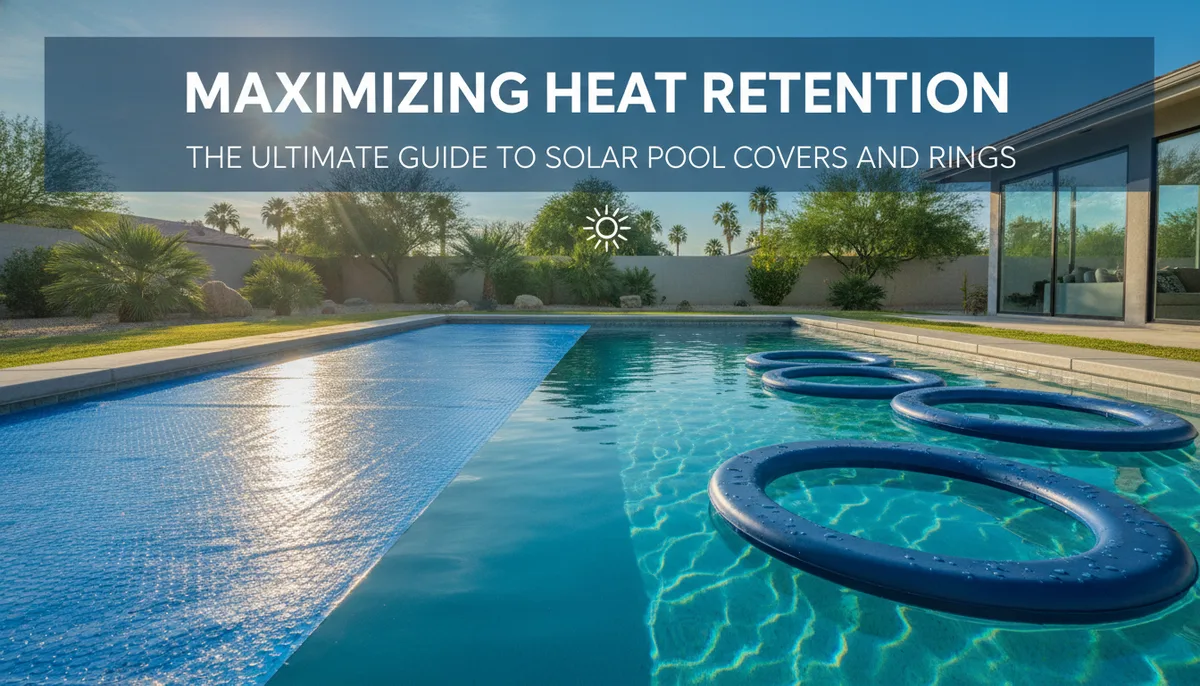
Maximizing Heat Retention: The Ultimate Guide to Solar Pool Covers and Rings
The Physics of Heat Loss: Why a Cover is Non-Negotiable
For any pool owner, the primary enemy of a warm swim is not the ambient air temperature, but a process known as evaporative cooling. Science tells us that evaporation accounts for approximately 75% of a pool’s total heat loss. When water molecules escape the surface and turn into vapor, they take a significant amount of energy (heat) with them.
Without a physical barrier, your pool is essentially a giant radiator dumping expensive thermal energy into the atmosphere. This is where solar covers, often called solar blankets, become the single most cost-effective tool in your arsenal. By creating a vapor barrier, a solar cover effectively "locks" the heat in the water.
In the context of The Science of Solar Pool Heating: A DIY Guide to Efficiency and Design, a cover acts as the "battery" that stores the energy your DIY collectors or heaters have worked so hard to generate. Without a cover, you are likely losing heat faster than your DIY system can produce it during the overnight hours.
Understanding Solar Blanket Variations: Mil Thickness and Color
When shopping for a solar cover, you will encounter two primary specifications: mil thickness and color. Understanding these is vital for balancing durability with heating performance.
Mil Thickness: Durability vs. Weight
"Mil" is a measurement of a thousandth of an inch. Common pool covers range from 8-mil to 16-mil.
- 8-Mil to 10-Mil: These are lightweight and easier to handle. However, they are more prone to tearing and typically have shorter lifespans.
- 12-Mil to 16-Mil: These are considered heavy-duty. They offer superior heat retention because the thicker plastic provides better insulation. They also stand up better to UV radiation and pool chemicals.
Color Dynamics: Clear, Blue, and Silver
The color of your cover determines how it interacts with solar radiation.
- Clear Covers: These allow the maximum amount of solar energy (short-wave radiation) to pass through the cover and penetrate deep into the pool water. This is excellent for active heating during the day.
- Blue Covers: These are the standard. They block some UV light but are highly effective at trapping long-wave thermal radiation (heat) inside the pool at night.
- Silver/Reflective Backing: Some high-end covers feature a reflective underside designed to bounce heat back into the water, maximizing nighttime retention.
Solar Sun Rings: The Modular Alternative
For many pool owners, the sheer size and weight of a one-piece solar blanket are deterrents. This is where Solar Sun Rings offer a compelling alternative. These are circular, inflatable discs (usually about 5 feet in diameter) that float on the surface.
Solar Sun Rings use the same "bubble" technology as blankets but are modular. They are held together by magnets, allowing them to break apart if someone (or a pet) accidentally falls into the pool—a safety feature that traditional blankets lack. While they leave small gaps between the circles, which reduces their total efficiency compared to a wall-to-wall blanket, they are significantly easier to remove and stack.
If you are building a complex system as described in The PoolHeatHacker Master Buying Guide: Essential Components for DIY Heating, consider whether the ease of use of rings will encourage you to actually use the cover every night. A 70% efficient ring system that is used daily is far superior to a 95% efficient blanket that sits in the shed because it's too heavy to move.
Maximizing Efficiency with Proper Installation and Sizing
A solar cover is only as effective as its fit. If there are large gaps around the perimeter, the "chimney effect" can occur, where moist, warm air escapes through the gaps, drawing more heat out of the water.
How to Trim Your Cover
Most solar blankets are sold in standard rectangular or round sizes. To get a custom fit for an irregular pool:
- Relax the Material: Lay the cover on the pool surface for 24 hours to allow the packing creases to flatten out.
- Trim with Care: Use sharp household scissors. Cut the cover so it fits flush against the pool walls. In above-ground pools, some owners prefer to leave an extra inch to "tuck" against the rail, though a flush fit is usually sufficient.
- The Bubble Side Down: This is the most common mistake. The bubbles must face down, touching the water. These bubbles create the insulating air pocket and provide the surface area for heat transfer.
The Role of the Reel
If you opt for a full-sized blanket, a high-quality reel is a mandatory investment. A reel allows a single person to uncover the pool in under a minute and prevents the cover from being dragged across the concrete, which can pop the bubbles and shorten the cover's life.
Maintenance: Protecting the Cover from the Sun and Chemicals
Ironically, the two things a solar cover interacts with most—sunlight and chlorine—are its primary causes of failure.
- Chemical Off-gassing: When you "shock" your pool, the chlorine levels are extremely high. You must leave the solar cover off for at least 24 hours after shocking. If you cover the pool immediately, the concentrated chlorine gas trapped under the cover will oxidize the plastic, making the bubbles brittle and prone to flaking.
- The "Cooked" Cover: When the cover is rolled up on a reel and exposed to direct sunlight, the layers of plastic act like a magnifying glass. The internal temperature of the rolled cover can reach levels high enough to melt the plastic to itself. Always use a white UV-protective "solar saddle" or tarp to cover the reel when the blanket is not in use.
- Cleaning: Periodically hose off the cover to remove calcium deposits and organic debris. This maintains the clarity of the plastic, ensuring maximum light penetration.
Integrating Covers into a Smart DIY Heating System
For the advanced DIYer, the solar cover is part of a larger ecosystem. If you have automated your pool using How to Automate Your DIY Heater with an Arduino: A Step-by-Step Technical Guide, you can actually use sensors to determine the optimal time to cover or uncover the pool based on the delta between water temperature and ambient air temperature.
For instance, if the air temperature is higher than the water temperature and the sun is shining, uncovering a "clear" pool might allow for faster heating. However, as soon as the sun dips or the wind picks up, the Arduino can trigger an alert to replace the cover to prevent the immediate loss of those gains.
Conclusion: The ROI of a Quality Cover
In the world of pool maintenance, few items offer a faster return on investment than a solar cover. By reducing water evaporation by up to 95%, you save on water replacement costs, chemical consumption (as chlorine doesn't evaporate as quickly), and, most importantly, energy.
Whether you choose a heavy-duty 16-mil blanket for maximum insulation or a set of Solar Sun Rings for convenience, the goal remains the same: keep the heat where it belongs—in the water. By combining a high-quality cover with a well-engineered DIY solar heater, you can effectively double your swimming season without spending a fortune on utility bills.