
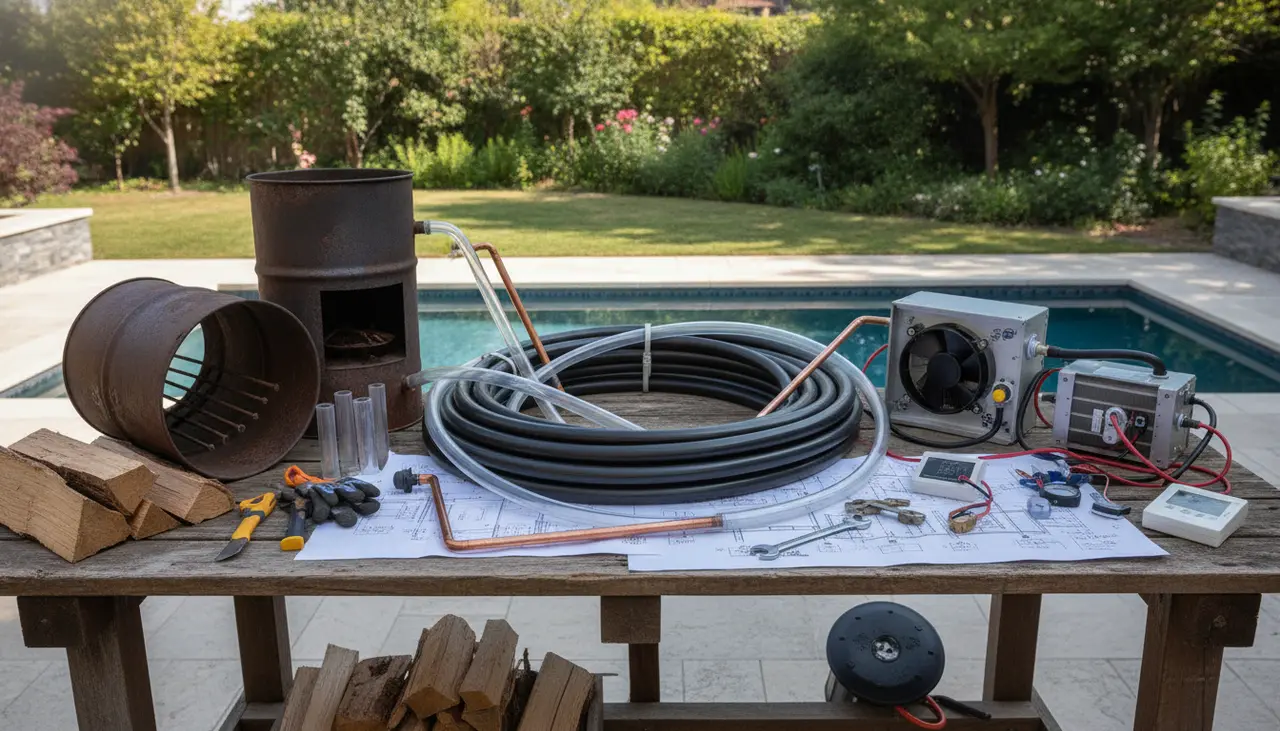
The PoolHeatHacker Master Buying Guide: Essential Components for DIY Heating
Selecting components for a DIY pool heating system requires a shift from consumer-level shopping to technical procurement. Unlike purchasing a turn-key heat pump, building a system involves matching fluid dynamics, thermal conductivity, and material durability to your specific backyard environment.
To build an effective DIY pool heater, you must prioritize three technical factors: the thermal transfer efficiency of your collector (solar or wood-fired), the flow rate capacity of your pump relative to head pressure, and the heat retention capability of the pool surface. For most backyard owners, a hybrid approach using black polyethylene (PE) tubing for solar gain and a stainless steel heat exchanger for wood-fired supplemental heat provides the most reliable season extension.
Buyer-Intent Introduction: Who This Guide Is For
This guide is designed for the backyard pool owner who prefers a wrench and a PVC primer over a professional installation contract. If you are looking for technical specifications for raw materials—such as pipe diameters, BTU calculations for wood-fired coils, and UV-resistance ratings—this is your roadmap. We focus on the "Build vs. Buy" logic, ensuring you invest in high-quality raw components that outperform cheap, ready-made plastic mats.
DIY Heating System Comparison
| System Type | Primary Components | Best For | Operational Cost | Complexity |
|---|---|---|---|---|
| Solar Collector (DIY) | Black PE Tubing, PVC Diverter, UV-rated manifolds | High sun exposure areas | Near Zero | Moderate |
| Wood-Fired Exchanger | 304/316 Stainless Steel Coil, Firebox, CPVC plumbing | Wood-rich lots; Night heating | Cost of wood | High |
| Gas/Electric Mod | Replacement burner kits, High-efficiency heat exchangers | Repairing/Upgrading existing units | High (Fuel/Utility) | High |
Strategic Component Selection
1. Solar Collector Materials: The Heat Absorber
For a DIY solar build, the collector is the engine. Avoid thin-walled vinyl; it degrades under UV exposure and high chlorine concentrations.
- Black Polyethylene (PE) Tubing: Use 1/2-inch or 3/4-inch ID (Inner Diameter). Smaller diameters increase surface area-to-water ratio, improving heat transfer, but increase head pressure.
- UV-Rated PVC (Schedule 40): Use for manifolds and supply lines. Non-UV rated PVC will become brittle and crack within two seasons.
- Glazing (Optional): Polycarbonate sheets can be used to create a "greenhouse effect" over your coils, significantly reducing convective heat loss in windy areas.
2. Wood-Fired Heat Exchangers: The Thermal Core
When building a wood-fired system, the material of the heat exchanger determines both the lifespan of the heater and the safety of the water.
- Stainless Steel (304 or 316): Highly recommended for pool environments. 316 stainless is superior for salt-water systems due to its resistance to chloride corrosion.
- Copper Coils: Offers higher thermal conductivity than stainless steel but is susceptible to pitting if the pool pH drops below 7.2.
- CPVC Piping: When connecting a wood-fired exchanger to your standard PVC pool plumbing, use at least 5-10 feet of CPVC (Chlorinated Polyvinyl Chloride) on the outlet side. Standard PVC can soften or melt at the high temperatures generated by a wood fire.
3. Plumbing and Flow Control
A DIY heater is only as good as the water moving through it. You must manage "Head Pressure"—the resistance the pump must overcome to push water through your coils.
- PVC Diverter Valves: Essential for bypassing the heater during the peak of summer or when the system is under repair.
- Check Valves (One-Way): Prevents water from draining out of elevated solar collectors back into the pool when the pump shuts off, which prevents air locks.
- Flow Meters: A critical diagnostic tool. Knowing your GPM (Gallons Per Minute) allows you to calculate the actual BTUs being added to the pool.
Best For Use-Case Recommendations
- Best for Above-Ground Pools (Budget): A ground-mounted solar coil array using 500ft of black PE tubing and a manual 3-way diverter valve. This bypasses the need for expensive automated controllers.
- Best for Off-Grid or Night Heating: A dedicated wood-fired immersion coil made of 3/4-inch stainless steel tubing. This is the only viable DIY method for heating a pool when the sun is down without high utility costs.
- Best for High-Efficiency Upgrades: Replacing a standard copper heat exchanger in an older gas unit with a high-efficiency cupro-nickel version to resist chemical corrosion.
Common Beginner Mistakes to Avoid
- Undersizing the Pump: DIY solar collectors, especially those mounted on roofs, add significant head pressure. Ensure your pump's flow curve can handle the vertical lift plus the friction loss of the small-diameter tubing.
- Using Non-Pressure Rated Parts: Never use "irrigation-grade" components for pool plumbing. Pool systems operate under pressure; use Schedule 40 pressure-rated fittings.
- Ignoring Nighttime Heat Loss: Even the most efficient DIY heater cannot overcome the loss of 5-10 degrees overnight. Every DIY build guide on this site assumes you are also utilizing a solar blanket or liquid heat shield to retain the energy you've harvested.
- Galvanic Corrosion: Do not mix dissimilar metals (like copper and aluminum) in the same plumbing loop without dielectric unions, or the softer metal will corrode rapidly.
Practical DIY Buying Checklist
- [ ] Tubing: 1/2" or 3/4" Black PE (DR 11 or higher for pressure).
- [ ] Valves: 1.5" or 2" PVC 3-way diverter valve.
- [ ] Adhesives: Deep-socket PVC primer and medium-bodied cement.
- [ ] Temperature Monitoring: Two T-cell thermometers (one for inlet, one for outlet) to calculate temperature differential (Delta T).
- [ ] Support: UV-resistant zip ties or stainless steel pipe clamps for securing coils.
FAQ
How many feet of pipe do I need for a solar heater? A general rule of thumb is to have a collector surface area equal to 50% to 80% of your pool’s surface area. For 1/2-inch tubing, this often equates to 800-1,200 feet for a standard 15x30 pool.
Can I use a standard garden hose for a wood-fired heater? No. Garden hoses are not rated for the high temperatures (often exceeding 140°F) or the pressure of a pool pump. They will soften, burst, or leach chemicals into the water.
What is the best metal for a DIY heat exchanger? Stainless steel 316 is the gold standard for DIY pool applications due to its balance of thermal transfer and chemical resistance.
Affiliate Disclosure: PoolHeatHacker participates in the Amazon Services LLC Associates Program and other niche affiliate programs. We may earn a commission on qualifying purchases of components like pumps, tubing, and valves linked in our guides at no additional cost to you.