
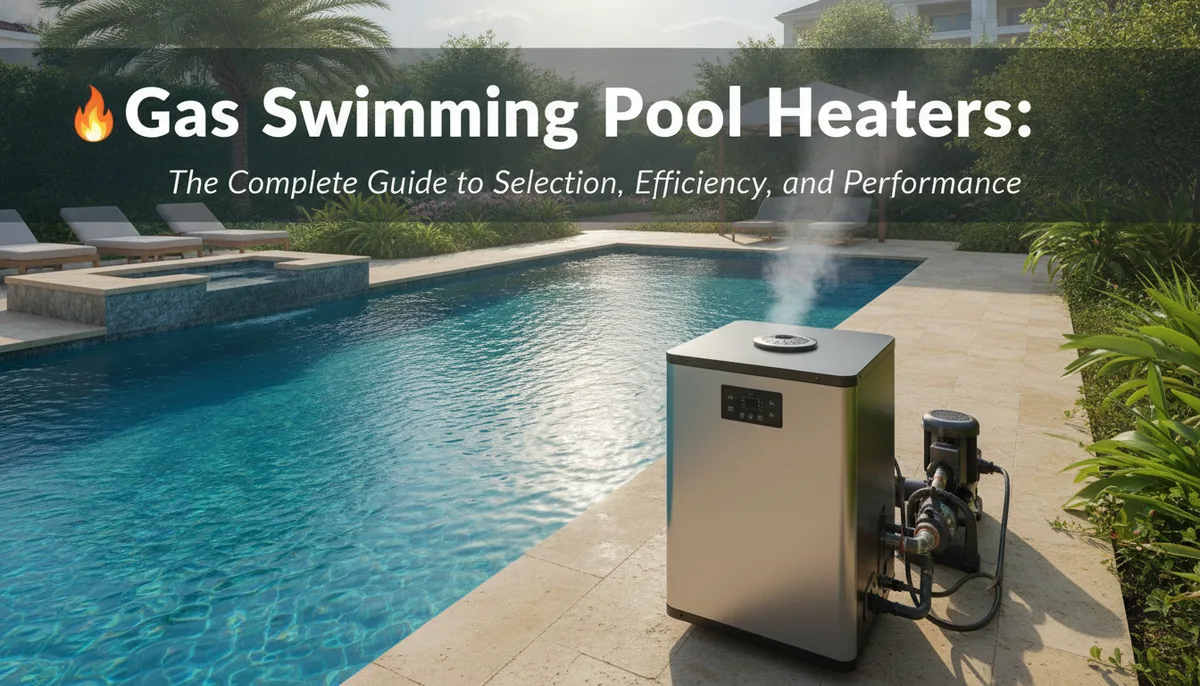
Gas Swimming Pool Heaters: The Complete Guide to Selection, Efficiency, and Performance
The Role of Gas Heaters in Modern Pool Management
When it comes to heating a swimming pool quickly and reliably, gas heaters remain the industry standard. Unlike solar heaters that depend on the sun or heat pumps that rely on ambient air temperature, gas heaters utilize either natural gas or propane to generate heat through combustion. This makes them the primary choice for pool owners who want "on-demand" heat, regardless of the weather or time of day.
Whether you are looking to extend your swimming season into the chilly autumn months or simply want to ensure your early morning laps are comfortable, understanding the mechanics and economics of gas heating is essential. Because gas heaters can be more expensive to operate than alternative methods, selecting the right unit and utilizing it efficiently is the difference between a comfortable pool and a financial burden.
How Gas Swimming Pool Heaters Work
The internal mechanics of a gas heater are relatively straightforward but highly effective. The process begins when the pool’s pump circulates water from the pool, through a filter, and then into the heater.
Inside the heater, gas is burned in a combustion chamber. This combustion generates intense heat, which is transferred to the water via a heat exchanger—typically a series of copper or cupro-nickel coils. As the water passes through these heated coils, its temperature rises before it is returned to the pool.
Millivolt vs. Electronic Ignition
Modern gas heaters generally come in two ignition varieties:
- Millivolt Ignition: These units use a standing pilot light. While they don't require an external electrical connection, they are less common in modern high-efficiency designs because the pilot light consumes gas even when the heater isn't running.
- Electronic Ignition: These are the modern standard. They use a spark or a hot surface igniter to light the burners only when the thermostat calls for heat. This eliminates the need for a standing pilot and improves overall safety and efficiency.
If you are looking to upgrade your system with modern controls, you might find our guide on How to Automate Your DIY Heater with an Arduino: A Step-by-Step Technical Guide useful for integrating digital logic into your pool pad.
Sizing Your Gas Pool Heater for Maximum Performance
Selecting a heater that is too small will result in a unit that runs constantly without ever reaching the desired temperature. Conversely, a unit that is significantly oversized may lead to "short-cycling," which can wear out components prematurely.
To size a heater correctly, you must consider the pool's surface area and the "temperature rise" required. The temperature rise is the difference between your desired pool temperature and the average air temperature during the coldest month you intend to use the pool.
The Standard Sizing Formula
- Calculate Surface Area: For a rectangular pool, multiply length by width. For a circular pool, use $\pi r^2$.
- Determine Temperature Rise: If you want an 80°F pool and the average air temperature is 60°F, your required rise is 20 degrees.
- BTU Output: Most experts suggest a formula where you multiply the surface area by a specific factor to determine the required BTU (British Thermal Unit) per hour.
A common rule of thumb is that for a 1-degree temperature rise per hour, you need approximately 10 to 12 BTUs per hour per square foot of pool surface. If you have a 400-square-foot pool and want a 20-degree rise, you are looking at a heater in the 250,000 to 400,000 BTU range depending on wind conditions and whether you use a cover.
For more information on selecting the right hardware for your setup, check out The PoolHeatHacker Master Buying Guide: Essential Components for DIY Heating.
Energy Efficiency and Operating Costs
According to the Department of Energy, the efficiency of a gas pool heater is measured by the ratio of usable heat energy produced to the energy consumed. Modern gas heaters are typically between 80% and 95% efficient.
Understanding Efficiency Ratings
A heater with an 80% efficiency rating means that for every $1.00 of gas burned, $0.80 goes into heating the water, while $0.20 is lost through the exhaust. High-efficiency "condensing" heaters can reach the mid-90s by capturing heat from the exhaust gases that would otherwise be wasted.
To minimize operating costs:
- Install a Pool Cover: This is the single most effective way to reduce heating costs. It prevents evaporation, which is responsible for up to 70% of a pool's heat loss.
- Optimize the Thermostat: Every degree you raise the temperature can significantly increase your gas bill. Most people find 78°F to 82°F to be the "sweet spot" for comfort and cost.
- Shield from Wind: High winds across the surface of the pool act like a giant heat exchanger in reverse, pulling heat out of the water. Fences or landscaping can act as windbreaks.
Installation Requirements and Safety
Installing a gas pool heater is not a typical DIY project for the average homeowner. Because it involves high-pressure gas lines and specific venting requirements to prevent carbon monoxide buildup, professional installation is vital.
Gas Line Sizing
A common mistake in heater installation is using a gas line that is too small for the heater's BTU rating. If the heater is starved for fuel, it will not burn cleanly, leading to "sooting" on the heat exchanger. This soot acts as an insulator, drastically reducing efficiency and eventually damaging the unit.
Proper Venting
If the heater is installed indoors or in an enclosed space, it must be vented according to strict local codes. Outdoor units usually have a "top-draft" design that allows exhaust to rise naturally, but they must still be placed away from windows and air intakes to ensure safety.
Chemical Balance and Heat Exchangers
One of the most frequent causes of heater failure is poor water chemistry. If your pool water becomes too acidic (low pH), it will literally eat away at the copper heat exchanger. This leads to leaks and often deposits copper into the pool, which can stain the finish. To protect your heater from chemical damage, especially if you use an automatic chlorinator, it is essential to use a check valve. You can learn more about this in our article on Integrating a Check Valve: Preventing Backflow in DIY Pool Heating Systems.
Maintenance for Longevity
To get the full 10-15 year lifespan out of a gas heater, annual maintenance is required. This isn't just about making sure it turns on; it's about ensuring the combustion process is clean and the heat transfer is efficient.
Annual Checklist:
- Inspect the Burners: Look for debris, spider webs, or rust that might be obstructing the gas ports.
- Check the Heat Exchanger: Ensure there is no scale buildup or soot on the fins.
- Verify Pilot/Igniter Function: Ensure the ignition sequence is crisp and there is no delayed ignition (which causes a "bang" sound).
- Winterization: In colder climates, the heater must be fully drained of water to prevent the copper coils from freezing and bursting.
Conclusion: Is a Gas Heater Right for You?
Gas heaters are the "heavy hitters" of the pool world. They offer a level of control and speed that other systems simply cannot match. While the operating costs are higher than solar or heat pump systems, the ability to heat a pool in hours rather than days makes them indispensable for many owners.
By choosing a unit with a high efficiency rating, sizing it correctly for your pool's surface area, and protecting your investment with a pool cover and proper water chemistry, you can enjoy a warm pool year-round without unnecessary expense. Whether you're integrating a gas heater into a complex automated system or keeping it simple with a manual thermostat, understanding these fundamentals ensures your backyard oasis remains comfortable and cost-effective.