
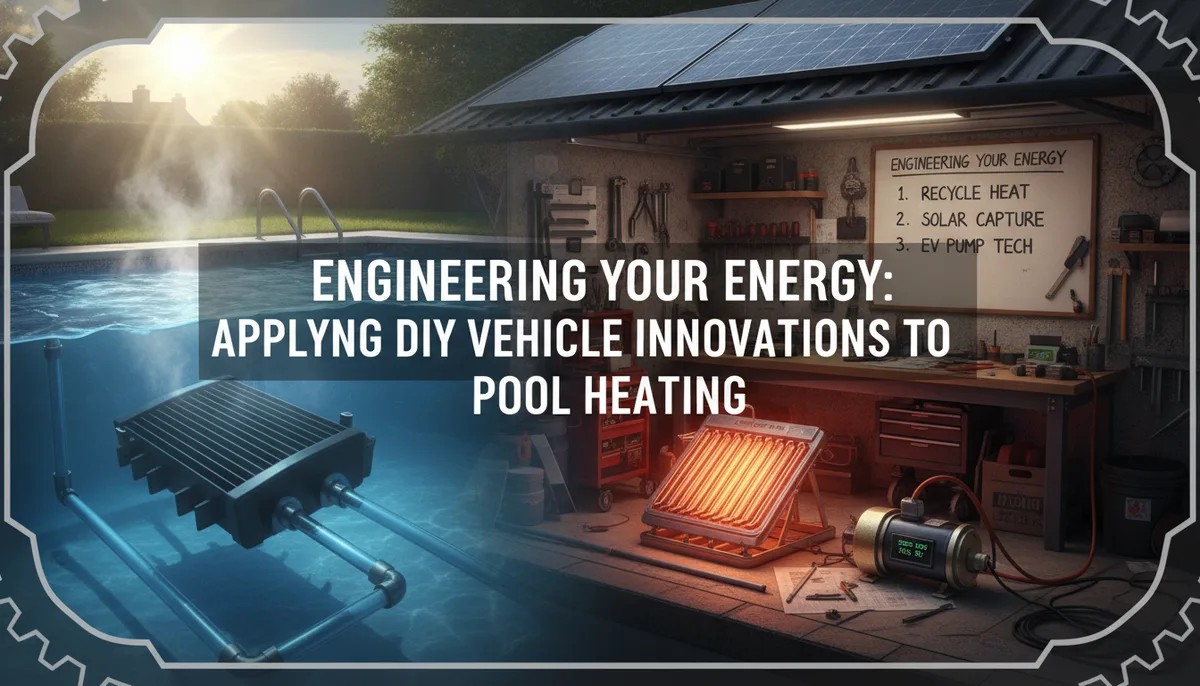
Engineering Your Energy: Applying DIY Vehicle Innovations to Pool Heating
The Intersection of DIY Mobility and Pool Heating
At first glance, a wood-gas-powered truck and a solar-heated swimming pool seem to have little in common. However, for the community of tinkerers and engineers at PoolHeatHacker and BuildItSolar, these projects share a foundational DNA: the quest for energy independence through DIY ingenuity. The same principles that allow a hobbyist to convert a gasoline engine to run on waste vegetable oil or harness the sun to propel a boat are the very same principles required to maintain a 85-degree pool without a massive utility bill.
The source of this inspiration—the vast repository of vehicle projects ranging from electric conversions to high-mileage commuters—provides a roadmap for thermal management and fluid dynamics. When we look at the engineering required to make a vehicle "ultra-efficient," we find direct applications for pool heating, particularly in the realms of solar thermal collection and biofuel combustion.
Biofuels: From the Gas Tank to the Pool Pump
One of the most fascinating segments of DIY energy is the conversion of vehicles to run on alternative fuels. Whether it is a diesel engine running on processed biodiesel or a "gasifier" truck running on wood chips, the goal is the same: extracting the maximum amount of BTUs from a renewable source.
The Logic of Wood-Gas and Thermal Mass
In the world of DIY vehicles, wood gasification involves heating wood in an oxygen-deprived environment to create a combustible gas. While you might not need to power an engine, the high-efficiency combustion logic of a wood-gasifier is incredibly effective for heating water. By applying these "gasification" principles to a pool heater, you can achieve a much cleaner, hotter burn than a traditional open-top fire pit.
If you are interested in exploring how these sustainable fuels can replace expensive propane or natural gas, our DIY Biofuels for Pool Heating: A Complete Guide to Sustainable Warmth offers a deep dive into the chemistry and mechanics of carbon-neutral heating.
Biodiesel for Off-Grid Heating
Just as a vehicle can be modified to run on waste fryer oil, a standard oil-fired pool heater can often be adapted to run on biodiesel. This requires a technical understanding of viscosity and fuel atomization—concepts frequently discussed in the vehicle conversion community. For the pool owner, this means the ability to scavenge fuel that would otherwise be discarded, turning a waste product into a warm swimming environment.
Solar Thermal Engineering: Lessons from Solar Boats and Commuters
The BuildItSolar archives are filled with solar-powered vehicles, including boats and lightweight commuter cars. These projects teach us a critical lesson about energy density. A solar car must be incredibly light and aerodynamic because the "fuel" (sunlight) is relatively dilute.
Solar Thermal vs. Photovoltaic (PV)
In the pool heating world, we often choose between solar thermal (heating water directly) and solar electric (using PV panels to power a heat pump). The vehicle world teaches us that for high-demand tasks, direct energy use is often superior. A solar boat that uses the sun to heat water for an onboard shower is far more efficient than a boat that converts that sun to electricity to run an electric water heater.
When building a DIY solar collector for your pool, you are essentially building a "stationary solar vehicle." You need to manage:
- Absorption: Using matte black surfaces to capture the widest spectrum of light.
- Insulation: Preventing the wind from stripping away the heat you've just captured (a concept called "convective loss" which is also vital in vehicle aerodynamics).
- Flow Rate: Ensuring the water moves fast enough to prevent boiling but slow enough to pick up a significant temperature delta.
Fluid Dynamics and Efficiency: The "High-Flow" Mandate
In high-mileage vehicle design, minimizing drag is everything. In pool heating, "drag" takes the form of head pressure and pipe friction. If your pump has to work too hard to push water through your solar collectors or heat exchanger, you are wasting electricity—the very thing you are trying to save.
Many DIYers make the mistake of using narrow tubing for their solar collectors, thinking it will "heat the water more." In reality, this creates massive backpressure. Following the lead of high-efficiency vehicle cooling systems, your pool plumbing should prioritize high-flow rates with minimal restrictions.
To ensure your system doesn't struggle, consult our technical guide on Best High-Flow Pool Pumps for DIY Solar Collectors: A Technical Guide. Choosing a pump that matches the resistance of your DIY collector is the difference between a system that works and one that burns out in a single season.
Choosing the Right Materials: The Plumbing of Innovation
The vehicle projects on BuildItSolar often utilize non-traditional materials to achieve their goals—aluminum for lightness, specialized plastics for chemical resistance, and copper for heat transfer. When you are "hacking" your pool heater, your choice of materials will determine the longevity of your project.
PVC and Chemical Resistance
Standard PVC is the backbone of the pool industry, but not all PVC is created equal. When building a manifold for a solar collector, you must account for UV degradation and thermal expansion. Just as a vehicle's cooling system must handle the expansion of coolant as it heats up, your pool plumbing must be able to "breathe" as it sits under the summer sun.
Using the right connectors and valves is essential for preventing leaks that can drain your pool or ruin your pump. For a breakdown of the specific components required for a robust DIY build, refer to our Essential PVC Fittings Every DIY Heater Needs: A Pool Plumbing Fittings Guide.
Thermal Conductivity: Copper vs. PEX
In vehicle radiators, copper and aluminum are king because of their thermal conductivity. In pool heating, copper is excellent but expensive and susceptible to damage if your pool chemistry (pH) is off. Many DIYers are now looking at high-density polyethylene (HDPE) or PEX, which offer a balance of durability and decent heat transfer, much like the modern materials used in EV battery cooling loops.
Safety and Scaling: Moving from Prototype to Permanent
One common thread in the BuildItSolar vehicle projects is the emphasis on safety. Converting a car to electric power involves high-voltage risks; converting a pool heater involves high-temperature and pressure risks.
When scaling up a DIY heater—especially one involving fire or concentrated solar—you must implement safety overrides.
- Pressure Relief Valves: Essential if you are using a closed-loop heat exchanger.
- High-Limit Switches: To prevent the water from reaching temperatures that could melt PVC piping or scald swimmers.
- Automatic Diverters: These use sensors to ensure that water only flows through your solar collectors when the sun is actually shining, preventing the collectors from acting as "radiators" that cool your pool at night.
Conclusion: The Future of DIY Energy
The "Hacker" mindset is about looking at a problem—like a cold pool or an expensive gas bill—and realizing that the solution doesn't have to come from a big-box store. By studying the successes of DIY vehicle innovators, we can apply advanced concepts of thermodynamics, biofuel combustion, and solar harvesting to our own backyards.
Whether you are building a simple black-hose solar collector or a complex wood-gasification boiler, the goal remains the same: a warmer pool, a lower carbon footprint, and the immense satisfaction of saying, "I built this myself." The projects found in the vehicle archives of the DIY community are not just about transportation; they are a masterclass in how we can all engineer a more sustainable, energy-efficient future.