
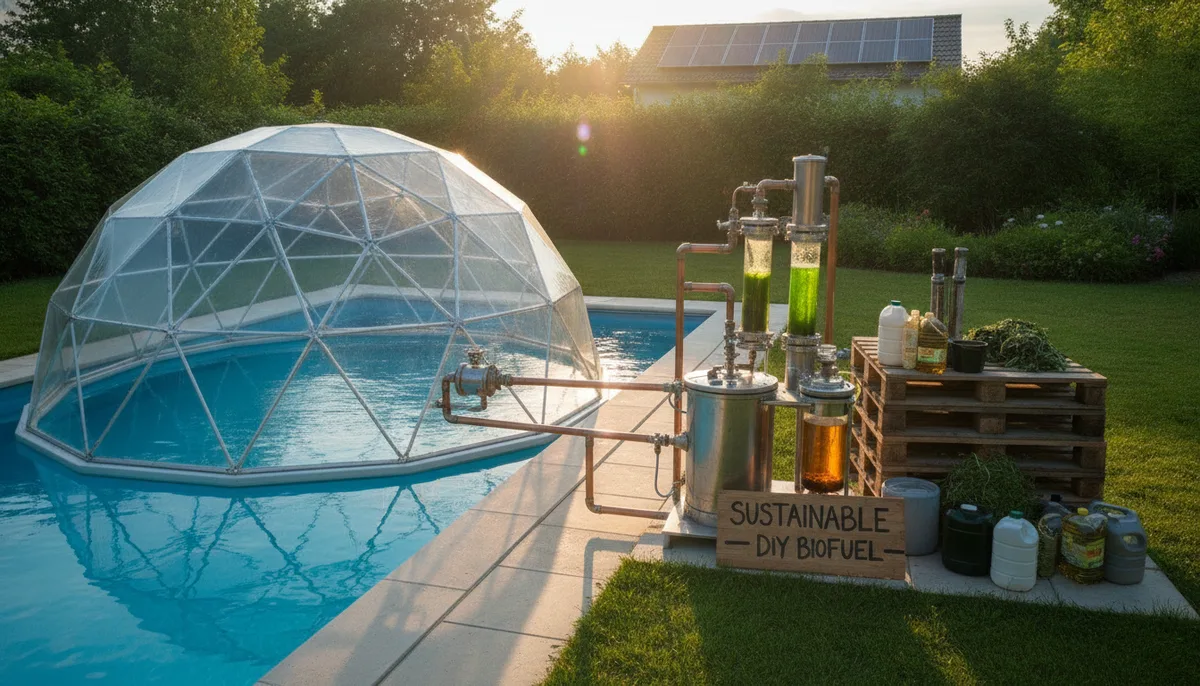
DIY Biofuels for Pool Heating: A Complete Guide to Sustainable Warmth
Introduction to Biofuels for Pool Heating
Heating a swimming pool is notoriously energy-intensive. For many homeowners, the cost of natural gas or electricity can turn a luxury into a financial burden. This is where DIY biofuels enter the picture. By utilizing organic materials—ranging from waste vegetable oil to seasoned timber—you can create a closed-loop heating system that is both cost-effective and environmentally conscious.
Biofuels are broadly categorized into liquid fuels (like biodiesel and ethanol) and solid fuels (like wood and biomass). While solar heating is a popular DIY choice, biofuels offer a distinct advantage: they provide "on-demand" heat regardless of the weather or time of day. When integrated with a proper heat exchanger, these fuels can maintain comfortable swimming temperatures well into the shoulder seasons.
However, moving from fossil fuels to DIY biofuels requires a solid understanding of fuel chemistry, combustion safety, and thermal transfer. This guide explores the most viable biofuel paths for the DIY pool enthusiast.
Biodiesel: Transforming Waste into Warmth
Biodiesel is perhaps the most efficient liquid biofuel for DIYers because it can often be used in existing oil-fired boilers with minimal modification. The process involves "upcycling" used cooking oil from restaurants—a resource that is often free or very inexpensive.
The Chemistry of Biodiesel
The core of biodiesel production is a process called transesterification. Waste vegetable oil (WVO) is too thick (viscous) to burn cleanly in standard burners. To fix this, you must strip away the glycerin molecules. This is achieved by mixing the oil with an alcohol (typically methanol) and a catalyst (sodium hydroxide or potassium hydroxide, commonly known as lye).
The result is two distinct layers: a thick, dark layer of glycerin at the bottom and a clear, amber layer of biodiesel (methyl esters) on top. Once washed and dried to remove residual impurities, this biodiesel can be used to fire a burner that heats a water jacket or a dedicated pool heat exchanger.
Implementing Biodiesel in Your Pool System
To use biodiesel for your pool, you will need a burner assembly and a heat exchanger. Because biodiesel has a slightly lower energy density than petroleum diesel, you may need to adjust the air-to-fuel ratio on your burner to ensure a clean, soot-free flame.
Ethanol Production: The Distillation Challenge
Ethanol is a high-octane liquid fuel produced through the fermentation of sugars and starches. While it burns very cleanly, producing it at a scale sufficient for pool heating is a significant undertaking.
Fermentation and Feedstock
The first step is creating a "mash" from feedstocks like corn, sugar beets, or even waste fruit. Yeast consumes the sugars, producing a low-concentration alcohol broth. For pool heating, where large volumes of fuel are needed, the efficiency of your feedstock is paramount.
The Distillation Process
To turn the mash into fuel, you must distill it. This involves heating the mixture to vaporize the alcohol, then condensing that vapor back into a liquid. Achieving "fuel-grade" ethanol (usually 95% purity or higher) requires a reflux still, which allows for multiple "mini-distillations" in a single pass.
It is important to note that ethanol is highly corrosive to certain plastics and rubbers. If you choose this path, ensure your fuel lines and pump seals are rated for high alcohol concentrations. For those interested in the thermal mechanics of distillation, many of the same principles apply to solar thermal collection, which you can explore in our guide on Harnessing the Sun: The Ultimate DIY Guide to Solar Cooking and Thermal Efficiency.
Wood and Biomass: The Most Practical DIY Fuel
For most DIYers, solid biomass—specifically wood—is the most accessible biofuel. It requires no complex chemical processing and can be sourced locally.
Efficiency and BTU Output
The key to successfully heating a pool with wood is maximizing the surface area of the heat exchange. Simply running a hose through a campfire is incredibly inefficient. Instead, DIYers often use "water-to-water" heat exchangers or copper coils wrapped tightly inside a combustion chamber.
Using seasoned hardwood (like oak or hickory) is essential. Green or wet wood wastes energy evaporating moisture rather than heating your pool water. Furthermore, wet wood creates creosote, which can clog your exhaust and create a fire hazard.
Building the Infrastructure
A wood-fired system requires a robust stove or furnace located a safe distance from the pool. For a detailed breakdown of how to construct a safe and effective unit, refer to our article on Building a Wood-Fired Pool Heater: Safety and Specs.
Safety, Storage, and Chemical Handling
Working with DIY biofuels introduces risks that aren't present with standard electric or gas heaters. Safety must be your primary focus during both production and combustion.
- Chemical Safety: Methanol used in biodiesel production is toxic and highly flammable. Lye is caustic and can cause severe chemical burns. Always work in a well-ventilated area and wear appropriate PPE (gloves, goggles, and aprons).
- Storage: Biofuels can degrade over time. Biodiesel is hygroscopic (it attracts water) and can grow algae if stored in a damp environment. Ensure your storage tanks are sealed and treated with stabilizers if the fuel will sit for more than a few months.
- Combustion Safety: Any DIY burner must have a "flame-out" sensor. If the flame goes out but the fuel keeps pumping, you risk an explosion or a massive fire. Never leave a DIY biofuel heater unattended during operation.
Integrating Biofuels into Your Pool Plumbing
Once you have a heat source, you need to get that heat into the pool. This requires a secondary plumbing loop to prevent your pool chemicals from corroding your heater and to ensure your heater's fluids (like glycol or raw fuel) never enter the pool.
The Role of the Heat Exchanger
A stainless steel or titanium heat exchanger is the bridge between your biofuel burner and your pool. The "hot" side carries the fluid heated by your biofuel, while the "cold" side carries the pool water.
Pump Selection and Flow Control
To move the water efficiently, you need a pump that can handle the resistance of the heat exchanger without cavitating. High-flow pumps are generally preferred for these applications to maintain a consistent temperature differential. For technical specifications on choosing the right pump for a DIY thermal system, see our Best High-Flow Pool Pumps for DIY Solar Collectors: A Technical Guide.
Proper plumbing also requires a variety of valves and bypasses. This allows you to divert water away from the heater when it's not in use or for maintenance. For a list of the necessary components, check out our Essential PVC Fittings Every DIY Heater Needs: A Pool Plumbing Fittings Guide.
Environmental Impact and Long-Term Viability
Biofuels are often considered "carbon neutral" because the carbon dioxide released during combustion is roughly equal to the carbon dioxide absorbed by the plant material while it was growing. However, the true sustainability of your DIY project depends on your sourcing.
- Waste Streams: Using waste vegetable oil or "slash" wood (fallen branches/debris) has the lowest environmental footprint.
- Energy Balance: If you spend more energy (electricity for pumps, heat for distillation) than you get out in fuel, the system is not viable. Always aim for passive or low-energy methods in your production phase.
By mastering the production of biodiesel, ethanol, or the efficient combustion of biomass, you can take complete control of your pool's climate. It is a rewarding intersection of chemistry, engineering, and sustainability that turns your backyard into a self-sufficient oasis.