
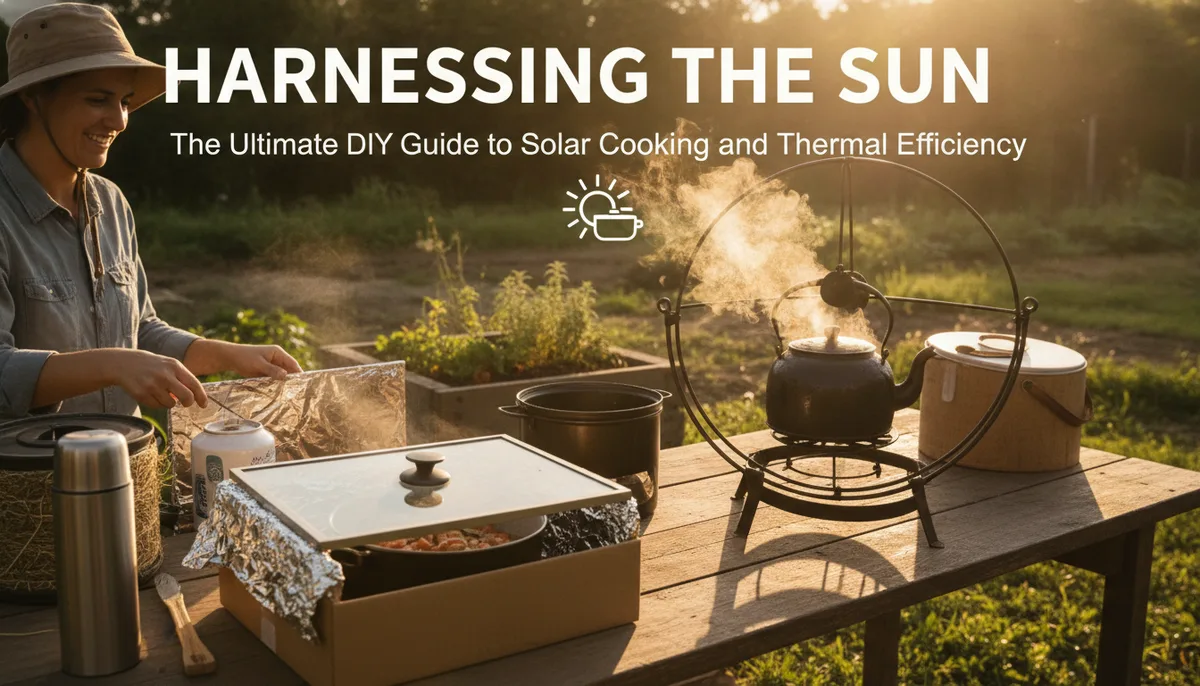
Harnessing the Sun: The Ultimate DIY Guide to Solar Cooking and Thermal Efficiency
For many DIY enthusiasts, the journey into solar thermal energy begins with a pool. Once you realize you can raise the temperature of thousands of gallons of water using nothing but the sun, the next logical question is: what else can I heat? Solar cooking is the high-temperature cousin of solar pool heating. It utilizes the same fundamental laws of physics—concentration, absorption, and retention—to reach temperatures capable of baking bread, roasting meats, and boiling water.
Building a solar cooker is one of the most rewarding "weekend warrior" projects. It provides a tangible, delicious result while honing your skills in managing thermal mass and solar gain. Whether you are looking for an off-grid backup or simply want to reduce your summer cooling load by cooking outside, understanding the mechanics of solar ovens is essential.
The Science of Solar Thermal Energy: Three Pillars of Heat
To successfully cook with the sun, your DIY build must master three distinct physical processes. These are the same principles we discuss in our Passive Solar Sunspaces: A DIY Guide to Thermal Efficiency and Integrated Heating, but applied to a much smaller, more concentrated area.
1. Concentration (Reflection)
The first step is gathering sunlight from a larger area and directing it toward a smaller one. This is achieved through reflectors. By using materials like polished aluminum or specialized films, you can "catch" more photons than would naturally hit your cooking pot.
2. Absorption
Once the light is directed at the pot, it must be converted into heat. This is why almost all solar cooking vessels are matte black. Black surfaces absorb the majority of the light spectrum and convert it into long-wave infrared radiation (heat).
3. Retention (The Greenhouse Effect)
Heat is useless if it escapes into the air. Solar cookers use a transparent cover—usually glass or heat-resistant plastic—to create a greenhouse effect. The light enters as short-wave radiation, hits the black pot, turns into long-wave heat radiation, and becomes trapped because long-wave radiation cannot easily pass back through the glass.
Choosing Your Design: Box, Panel, or Parabolic?
The "Build It Solar" archives highlight a variety of designs, each suited for different culinary needs and technical skill levels.
The Solar Box Cooker
The box cooker is the most popular DIY design. It consists of an insulated box with a transparent top and often one or more reflective flaps.
- Pros: Excellent heat retention; can reach 300°F (150°C); works like a slow cooker.
- Cons: Takes longer to preheat than other designs.
- Best for: Baking bread, stews, and rice.
The Panel Cooker
A panel cooker (like the famous "CooKit") uses a series of flat reflective panels to direct light onto a pot placed inside a high-temperature plastic bag.
- Pros: Extremely cheap and portable; easy to store.
- Cons: Low wind resistance; lower top temperatures.
- Best for: Simple meals in bright, calm conditions.
The Parabolic Cooker
These are the "high-flow" engines of the solar world. A curved, dish-like reflector focuses light into a single, intense focal point.
- Pros: Can reach temperatures over 500°F (260°C); capable of frying and grilling.
- Cons: Requires frequent tracking (re-aligning with the sun every 15-30 minutes); potential fire and eye safety hazards.
- Best for: Boiling water quickly or searing meat.
Essential Materials for the DIY Build
When sourcing components for your solar cooker, quality matters just as much as it does when selecting parts from The PoolHeatHacker Master Buying Guide: Essential Components for DIY Heating.
The Cooking Vessel
Your pot should be thin-walled and dark. Thin metal conducts heat to the food faster than heavy cast iron, which requires significant energy just to warm up the metal itself. A dark, matte finish is non-negotiable.
Insulation
For box cookers, the space between the inner and outer walls must be filled with an insulator that won't off-gas at high temperatures. Rigid fiberglass boards or even crumpled newspaper (if kept dry) can work, though professional-grade wool or high-temp foam is preferred.
Glazing
Tempered glass is the gold standard for solar ovens. It handles the thermal stress of uneven heating much better than standard window glass. If you are building a lightweight or portable model, certain high-temperature plastics like Lexan can work, though they may yellow over time due to UV exposure.
Optimizing Performance: Tracking and Angle of Incidence
A common mistake among DIYers is failing to account for the sun's movement. For a solar cooker to operate at peak efficiency, the reflectors must be perpendicular to the sun's rays.
- The 20-Minute Rule: For box cookers, you generally need to adjust the orientation every 45 to 60 minutes. For parabolic cookers, this window shrinks to 15-20 minutes.
- The Shadow Test: A simple way to check your alignment is to look at the shadow cast by the cooker. If the shadow is perfectly symmetrical and minimized, your cooker is likely aimed directly at the sun.
- Seasonal Adjustments: Remember that the sun sits lower in the sky during winter. If you are using a fixed-base cooker, you may need to prop up the back of the unit to achieve a better angle of incidence.
Safety Considerations in Solar Thermal Projects
While solar cooking is generally safe, the temperatures involved—especially with parabolic designs—demand respect.
- Eye Protection: When working with parabolic reflectors, the concentrated light can be blinding. Always wear UV-rated sunglasses when adjusting the cooker.
- Burn Hazards: The "oven effect" is silent. Unlike a gas stove, there is no flame or sound to warn you that a surface is 300°F. Always use oven mitts.
- Food Safety: Use a thermometer to ensure that meats reach the USDA-recommended internal temperatures. Because solar cooking is often slower, food can spend more time in the "danger zone" (40°F to 140°F) if the cooker isn't properly preheated or if the day is cloudy.
Conclusion: Expanding Your Solar DIY Skillset
Mastering the solar cooker is a gateway to more complex solar thermal projects. The lessons learned about insulation, reflective geometry, and the greenhouse effect are directly transferable to building more efficient pool heaters or home heating supplements.
If you can successfully harness the sun to bake a loaf of bread, you have mastered the fundamentals of free energy. Whether you are building a simple Kyoto box or a high-tech parabolic dish, you are participating in a global movement toward energy independence and thermal efficiency.
For those interested in the crossover between household heating and solar energy, consider exploring our guide on how these same principles apply to larger structures in our article on Passive Solar Sunspaces. The sun provides more than enough energy to power our lives; we just have to build the right tools to catch it.