
Liquid Solar Pool Cover vs Blanket: Heat Retention Data for DIYers
Disclosure: This post contains affiliate links. If you purchase components through these links, we may earn a small commission at no additional cost to you.
For the DIY pool enthusiast, generating heat is only half the battle. Whether you are running a custom copper-coil wood burner or a bank of black poly pipe solar collectors, the thermal energy you fight to put into the water is constantly escaping.
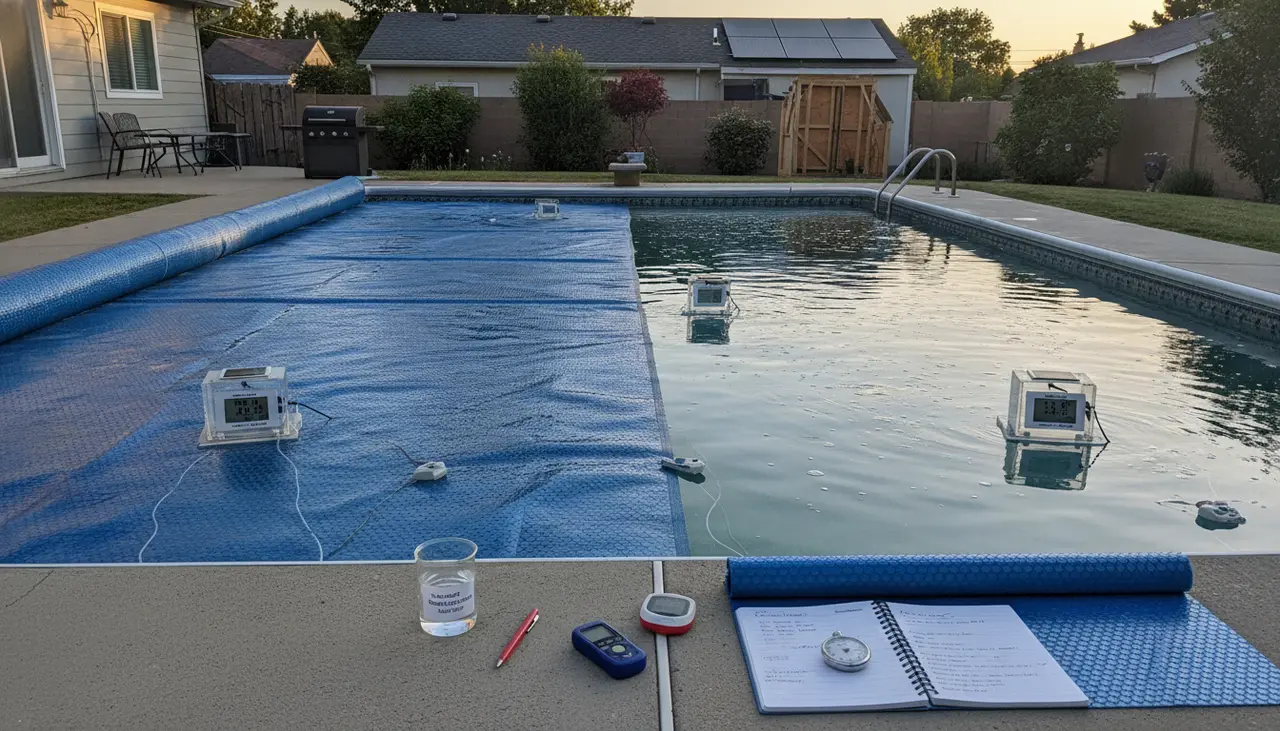
The Short Answer: A traditional solar blanket is objectively superior for heat retention, reducing evaporation by up to 95% and maintaining 5–10 degrees Fahrenheit more than an uncovered pool. A liquid solar cover is a monomolecular film that reduces evaporation by approximately 70–80%. While less efficient, the liquid option is the preferred choice for pools with irregular shapes or owners who prioritize ease of use over maximum BTU preservation.
Who This Guide Is For
This comparison is designed for backyard pool owners who have implemented or are planning to implement DIY heating solutions. If you are investing time into building a high-efficiency system, you need to understand the "Heat Loss Prevention" pillar to ensure your hardware isn't working in vain.
Heat Retention Comparison Table
| Feature | Traditional Solar Blanket | Liquid Solar Cover |
|---|---|---|
| Evaporation Reduction | 90% – 95% | 70% – 80% |
| Nighttime Heat Retention | Excellent (Thermal Barrier) | Moderate (Surface Tension) |
| Installation Effort | High (Manual deployment/reeling) | Zero (Automated or manual pour) |
| Wind Resistance | High (If anchored/weighted) | Low (Film breaks in wind > 5mph) |
| Safety Factor | Risk of entrapment if not used right | No physical barrier risk |
| Compatibility | Best for rectangular/standard shapes | Best for irregular/kidney shapes |
Traditional Solar Blankets: The Physical Barrier
Traditional blankets are typically made of UV-stabilized Low-Density Polyethylene (LDPE). They function by creating a physical air gap between the water surface and the atmosphere.
Technical Specifications to Look For:
- Micron Thickness: Aim for 12-mil to 16-mil. Thinner blankets (8-mil) tear easily, while thicker ones are harder to roll.
- Bubble Shape: Newer "diamond" or "quilted" bubble shapes increase surface area contact compared to standard circles.
- Thermal Conductivity: The air trapped in the bubbles acts as an insulator, significantly reducing the transfer of heat from the water to the cooler night air.
Best For:
- Owners of DIY solar collectors who need to "lock in" the 2-4 degree gains made during peak sunlight hours.
- Standard-shaped above-ground pools where a reel system can be easily installed.
- Cold climates where nighttime temperature drops are greater than 20°F.
Liquid Solar Covers: The Monomolecular Film
Liquid covers use a biodegradable fatty alcohol (usually cetyl alcohol) that is less dense than water. It rises to the top and forms a layer one molecule thick. This layer increases the surface tension, making it harder for water molecules to escape as vapor.
Why This Works: Evaporation is the primary source of heat loss in swimming pools. By suppressing the phase change from liquid to gas, you retain the latent heat within the pool. For a deep dive into the components needed to manage your pool's thermal efficiency, see The PoolHeatHacker Master Buying Guide: Essential Components for DIY Heating.
Best For:
- Irregularly shaped pools where cutting a physical blanket is impractical.
- Pools with water features (fountains, slides) that stay active.
- Users who find physical blankets too heavy or aesthetically unpleasing.
Practical Tradeoffs
1. The Wind Factor
Liquid covers are highly susceptible to wind. If your backyard experiences consistent breezes over 5 mph, the monomolecular film will "clump" at one end of the pool, leaving the rest of the surface exposed. A physical blanket remains effective regardless of wind, provided it is properly fitted to the edges.
2. Solar Gain vs. Retention
While blankets help retain heat at night, they can also block some solar irradiance from reaching the water during the day. However, for those using a DIY Solar Pool Heater: The 100ft Poly Pipe Method, the heat is being generated externally and pumped in. In this scenario, the blanket's ability to prevent evaporation far outweighs its potential to block direct sunlight.
3. Maintenance and Chemical Interaction
- Blankets: Must be rinsed to prevent calcium buildup and stored in the shade when off the pool to prevent UV degradation of the bubbles.
- Liquid: Requires regular dosing (usually every 30 days or after heavy splashing/backwashing). It is generally pH neutral and does not interfere with standard chlorine or saltwater systems, though high bather loads can break the film temporarily.
Common Beginner Mistakes
- Undersizing the Blanket: If there are gaps between the blanket and the pool wall, "chimney effect" evaporation occurs, significantly reducing the thermal benefit.
- Leaving the Blanket on in Extreme Heat: If your DIY heater is over-performing and the water exceeds 90°F, leaving a blanket on can accelerate chlorine degradation and potentially damage the liner.
- Expecting Liquid Covers to Stop Debris: Unlike physical blankets, liquid covers provide zero protection against leaves or insects.
- Ignoring Solar Rings: Solar rings are a middle-ground DIY solution—smaller physical circles that are easier to manage than a full blanket but provide better retention than liquid.
FAQ
Can I use both a liquid cover and a physical blanket? Yes. Using a liquid cover provides a secondary layer of protection for when the blanket is off during the day, and the blanket provides maximum retention at night.
Will a liquid solar cover clog my filter or heater? No. The molecules are too small to impact sand, DE, or cartridge filters. They are also non-corrosive and safe for use with copper or stainless steel heat exchangers.
How many BTUs am I actually saving? On average, an uncovered 15,000-gallon pool can lose up to 50,000 BTUs per hour through evaporation on a cool, breezy night. A physical blanket can reduce this loss to under 5,000 BTUs. A liquid cover typically reduces it to approximately 12,000–15,000 BTUs.
Summary Checklist for Heat Retention
- Measure your surface area: Determine if a standard reel fits.
- Evaluate wind exposure: Choose a physical blanket for windy sites.
- Calculate DIY Heater Output: If your DIY collector output is low, you must use a physical blanket to see a net temperature increase.
- Check UV Ratings: Ensure any physical cover is rated for at least 3-5 years of direct sun exposure.